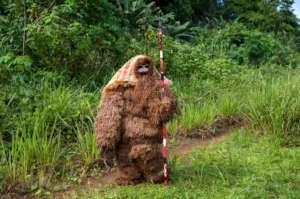
Primates on the Bioko Island
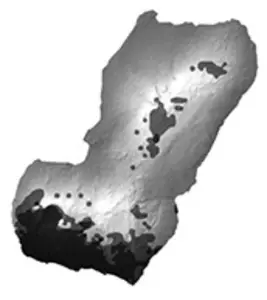
The island of Bioko in Equatorial Guinea is the ecosystem of seven species of diurnal primates. Currently, they are at risk of extinction due to the historical abuse of their poaching for human consumption. These types of primates are found primarily in the National Park Pico Basilé and the Scientific Reserve Gran Caldera, which is the only place where the seven primate species can be found in the same habitat.
Primates on the Island of Bioko
Throughout history, primates on Bioko Island have been passively protected due to the inaccessibility of their natural habitat. But industrialization and new infrastructures change this ideal scenario.
Therefore, it is the mission of all actors and lovers of sustainable tourism in Equatorial Guinea to protect the fauna that we have on Bioko Island. It is as well our duty to show the beauty of it to continue conserving it.
For this reason, we would like to show you the seven species of diurnal primates that can be found on the island of Bioko
Bioko drills, Mandrillus leucophaeus poensis
Status: Danger of Extinction
The drills are mostly found in the southern part of the Bioko island, throughout the National Reserve “Caldera de Luba“ and in the vicinity of “Pico Basilé”. As for their lifestyle on the island of Bioko, the groups usually do not exceed 20-25 individuals, with a single adult male surrounded by females and their offspring.
The main difference between males and adult drill females is their size and weight. Females weigh from 7 to 12 kg, about half as much as males, which can reach 27 kg in adulthood. Male drills have a totally blackish face, except for a pink area on the chin surrounded by a white coat. Their buttocks are bluish and have a pinkish area under the tail. Drills use their large canine tusks as a defense against any other aggressor species.
Its diet is based on small vertebrate and invertebrate animals and eggs, including sea turtles in the Ureka area that are also in danger of extinction. In addition, they also feed on tubers, ants and termites.
Black colobus of Bioko, Colobus satan satan
Status: Danger of Extinction
Black colobus are found mostly in the southern part of Bioko Island and around the top of Basilé Peak. These primates spend most of their time on top of the trees in the primary and secondary forests. They are usually kept in high places with plenty of food, but occasionally descend from the high branches to collect nuts and other fallen fruits.
The black colobus are, as its name suggests, totally black and that is why they differ so well from the other primates of the Island of Bioko. Although they have a brown coat at birth, it changes to black within a few months of life. These primates lack opposable thumbs and have long fingers and limbs. Their teeth are flat and large, allowing them to crush seeds more easily. In terms of weight, adult males, which are larger than females, weigh between 4 and 14 kg, with an average of 11 kg.
These primates are granivorous and their diet consists of hard seeds and nuts. Its molars are designed for crushing and are thought to be an evolutionary adaptation to the granivory. Aside from nuts and seeds, black colobus eat immature fruits and leaves.
Red-eared guenon, Cercopithecus erythrotis erythrotis
Status: Vulnerable
The red-eared guenon is the smallest monkey that can be found visiting Bioko island. They are relatively easy to find in the southern part of Bioko Island and throughout the protected area of Pico Basilé and Caldera de Luba. Red-eared guenons usually live in family groups of 4 to 30 individuals.
The size varies considerably depending on the ecosystem they are in and the ease of finding food. A typical family consists of 1 adult male surrounded by 10 adult females with their young offspring.
The males are slightly larger than the females and have a length of 42 cm. Their tail is long and partially prehensile and increases their length by another 60 cm. The average weight of adult males is 3.6 kg. Moreover, the females have an average length of 38.4 cm, to which must be added 55 cm of tail. The average weight of adult females is 2.9 kg. Overall, this primate has a life expectancy of about 16 years.
A large portion of the red-eared guenon’s diet is fruit-based, followed by seeds, young leaves, flowers, buds, and insects. Insects are fundamental to the diet of pregnant and lactating females due to their high nutritional content.
Putty-Nosed guenon, Cercopithecus nictitans martini
Status: Vulnerable
Cercopithecus nictitans or putty-nosed guenons are found in the southernmost areas of Bioko Island, near the closest regions to the coast. If you see them through the jungles of Bioko you can recognize them by the distinctive stain on the nose. Their fur ranges from dark olive to black and sometimes features a white patch on the chest.
These primates weigh between 4.2 and 6.6 kilograms. Males have greater length and body mass than females. They are diurnal and, like their Guenon relatives, have trichromatic vision. These primates are mainly arboreal and have a life expectancy of about 20 years.
Putty-nosed guenons are a social species. They are found in groups of between 12 and 30 animals. If you visit Bioko island and go on an excursion around Ureka, you can get to hear fights within the group over alpha-male status, so they are a clearly hierarchical species. They mainly move through the medium-sized forest, so they are close to the coast. And they often perform acrobatics and branch-to-branch jumps to move through this type of habitat.
Pennant red colobus, Procolobus pennanti pennatis
Status: Danger of Extinction
The Pennant red colobus is located southwest of the island of Bioko, in the vicinity of the “caldera de Luba”.
These primates are arboreal and spend most of their lives in the treetops. For this reason, it is extremely difficult for any tourist in Equatorial Guinea to see them.
Generally, the male red colobus tends to be larger than the females. The male oscillates between 7 and 11 kg of mass, while the length of the head to the body is usually between 53 and 63 cm. On the other hand, the tail oscillates between 60 and 70 cm.
One of the common characteristics of the colobus family is the absence of thumbs. Instead, there is a lump that resembles a severed thumb. To supplement this feature, the other fingers are elongated and form a hook to hold the branches. As with many climbing mammals, the extremities of Pennant’s red colobus are also elongated. Their heads are usually quite small and have a round belly.
Golden-bellied Crowned Guenon, Cercopithecus pogonias pogonias
Status: Vulnerable
The crowned guenon is found in the southern part of Bioko island, in areas near the coast. The length of the body is usually between 30 and 50 cm, and their tails are longer than their bodies, measuring between 65 and 90 cm. Adult females are around 4 kg, while adult males weigh 1 kg more, reaching up to 5 kg. Typically, these primates can live between 24 and 30 years wild.
As the males grow into adults, they leave the group in which they were born and look for new groups of 8 to 20 individuals. These groups are formed by a single male, several females and their offspring.
This type of primate has its black arms, legs and tail base. The rump, the belly and the inside of the legs are golden yellows. Their faces are mainly dark blue or grey, with a pink snout covered with white hairs.
The hair surrounding her face is yellow, marked with broad black stripes, ranging from the side of the eyes to the temples and through the center of the forehead. This forms a small ridge, which gives the crowned monkeys their name. Other characteristics that may present are the set of sideburns that have traces of white, yellow and grey.
Preuss Monkey, Allochrocebus preussi insularis
Status: Danger of Extinction
Preuss monkeys are found in the highest regions of the Pico Basilé and Caldera de Luba National Park. These primates are normally frugivorous, as their diet consists mostly of fruits and a small portion of tree shoots.
The Preuss monkey weighs, on average, 10 kg. Males measure around 42-70 cm in length, while females only 37-55 cm on average. It has been estimated that, in freedom, they can live up to 31 years.
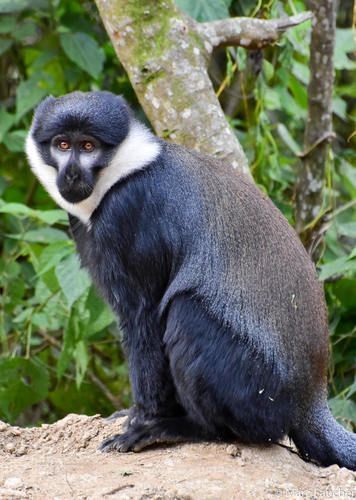
Preuss monkeys have a kind of silver-white fur collar on the bottom of their neck. Its face is dark grey and has lighter grey fur tufts.
The crown of his head, shoulders, flanks, thighs and the middle section of his tail are also dark grey with silver spots. Most of her body is black, except for her back, which is reddish-brown.
Conclusion on primates in Equatorial Guinea
Equatorial Guinea has an unspoiled and unexplored fauna and flora. And primates are, to a large extent, a major part of the biodiversity of Bioko Island. Therefore, from Rumbo Malabo, we encourage all nature lovers to protect and communicate the benefits that these primates bring to the community.
One of the main problems that reduce the population of these species is poaching for sale in the markets. Simply with gestures as simple as not consuming them in restaurants and not buying them in supermarkets, you can make a difference.
We need everyone to take care of the environment. Join the challenge and leave us in the comments what tricks you use to protect our biodiversity.
Special mention for “The Drill Project” and “Bioko Biodiversity Protection Program” for the great work they are doing and for the photos and illustrations
Do not hesitate to follow us on social media to keep up with all our news and articles
Did you like it? Share it with your friends on any social media and help us grow.

Ndowe Tribe: History, Culture & Legacy in Equatorial Guinea
Discover the Ndowe tribe’s rich history, culture, and traditions in Equatorial Guinea, from their origins to their enduring legacy today.
The Benga People and Their Connection to Corisco: History, Culture, and Tradition
Discover the rich history, culture, and traditions of the Benga people of Equatorial Guinea. Learn about their origins, society, and legacy.
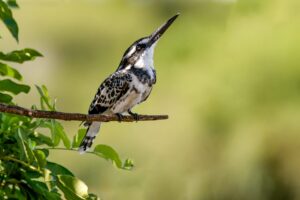
Birdwatching Guide for Travelers in Equatorial Guinea
Did you know that Equatorial Guinea is one of the best birdwatching destinations in West Africa? If you’re passionate about nature, photography, or simply looking for a different kind of trip, get ready to look up and fall in love with a sky full of life and color. With over 300 bird species, many of them endemic or hard to find elsewhere in the world, this small country is a gem for birdwatching tourism enthusiasts.
From the misty peaks of Pico Basile to the jungles of Monte Alén and the calm banks of coastal rivers, every corner offers a natural concert of songs, acrobatic flights, and stunning colors.
History, Culture and Tradition on Annobon
Annobon, a remote and fascinating island of Equatorial Guinea, boasts a rich history, vibrant culture, and deep-rooted traditions. Influenced by its Portuguese and African heritage, the island’s unique Creole identity is reflected in its language, music, and customs. From traditional dances to community-driven fishing practices, Annobon offers a glimpse into a way of life shaped by resilience and a strong sense of unity.
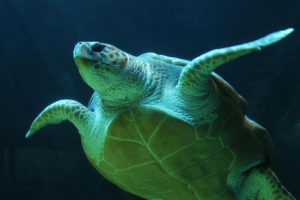
Sea Turtles in Equatorial Guinea: A Hidden Treasure to Discover
On the beaches of Equatorial Guinea, sea turtle nesting is a unique spectacle. These coasts are home to species like the leatherback and green turtle, offering a magical experience. A perfect destination for nature and conservation lovers. Experience it up close!
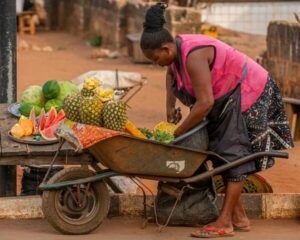
The Tropical Fruits of Equatorial Guinea: A Natural Treasure
Discover the exotic fruits of Equatorial Guinea, such as pineapple, guava, banana, djaka, breadfruit, and abam. Learn about their nutritional benefits, cultivation methods, and their importance in local culture.
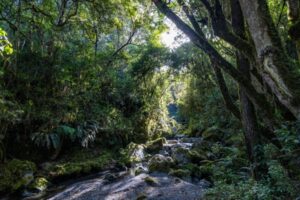
Bere Stone: The Ecological Gem*
Bere Stone is one of the ecological gems gaining increasing significance in the sustainable tourism scene of Equatorial Guinea.
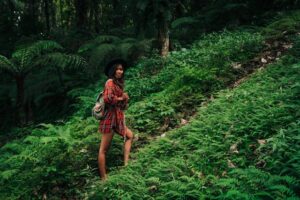
Scientific Reserve of the Great Crater of Luba: All Its Secrets
Discover the Scientific Reserve of the Great Crater of Luba in Equatorial Guinea, a natural paradise that invites you to explore lush rainforests, pristine beaches, and unique vegetation.