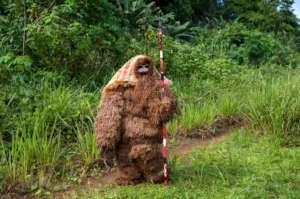
Bere Stone: The Ecological Gem
Considered a natural monument, Bere Stone is one of the ecological gems gaining increasing importance in the sustainable tourism of Equatorial Guinea.
That’s why here we’ll tell you everything you need to know about Bere Stone. This will allow you to discover the natural wealth hidden within this treasure, and it will also help in the conservation of this park.
Discover Bere Stone
More than just a rock, Bere Stone is a dome-shaped hill located in the continental region of Equatorial Guinea. Its name, “stone,” comes from the hill’s pointed shape, which makes it resemble a giant rock.
Surrounding this stone, located between the districts of Nsok-Nsomo and Añisok, is a natural park that spans over 100 square kilometers. This makes it one of the smallest natural areas in Equatorial Guinea, as some reserves can reach 200 square kilometers or more.
Relief and Hydrography of Piedra Bere
In terms of relief, the most notable features are the several dome-shaped hills, including Piedra Bere, Akom, and Bulu. Surrounding these hills, we find grasslands and flat terrain, with various rocks and small geographical features typical of granite soils.
Within the Piedra Bere reserve, there are small tributaries and streams, with a river passing through the park. This river originates in the Sierra de Nson and flows through the natural reserve. This provides an important water source that helps keep the grasslands green during the rainy season.
Climate of the Bere Stone
Here is the translation of your text into English: Regarding the climate, we find that Piedra Bere features the typical weather of the continental region of Equatorial Guinea. This climate is of the warm and humid type, with an average annual temperature of 25 degrees Celsius. As for rainfall, it reaches an average of 2000 mm per year.Regarding the seasons, in the Piedra Bere area, there are four distinct seasons. On one hand, we have two dry seasons: one from December to February and another from June to August. As for the wet seasons, there are also two: one from March to May and another from September to November.
What is the flora of Piedra Bere like?
The flora of Piedra Bere is characteristic of the dense forest of Equatorial Guinea. It is worth noting that this is abundant in the low-altitude continental region. Here, we can differentiate between two main types of flora. The first is related to agriculture, featuring species such as cassava, plantain, peanut, and cacao.Regarding the flora native to the natural reserve and the areas that have not been used for agriculture, the tropical forest stands out. Among the most abundant species are redwood, Ukola, Abe, Elondo, Assam, and Essang, as well as ferns and tropical grassland plants.
And what about the fauna?
Unfortunately, the region around Piedra Bere has suffered from intense hunting, leading to the near extinction of large mammals in the area, as well as other animals. This has caused populations around the grasslands to be almost nonexistent.Only Piedra Bere and the other hills have served as the last refuge. Therefore, we only find small animals such as antelopes, reptiles, and rodents. With a great deal of luck, you might spot some large mammals. These include gorillas, mandrills, chimpanzees, and some large antelopes, as well as freshwater fish.
Population in Piedra Bere
Despite being affected by hunting and agriculture, the population in the Piedra Bere area is concentrated along the road that passes nearby and around the base of the hill. There is no population living on or within the hill itself.The villages in this area are inhabited by tribes belonging to the Fang ethnic group. These tribes primarily rely on agriculture, hunting, and fishing in the Piedra Bere river for their subsistence, as well as logging. Ecotourism has not yet become a subsistence practice for these populations.
Legal Status of Piedra Bere
Piedra Bere is threatened by its uncertain legal status. This is because there is no law protecting or designating it as a natural reserve, a protected natural area, or a national park. It is only considered a natural park by name, but not yet by legal framework.Moreover, Piedra Bere does not have any conservation or protection projects from the government. Nor are there regulations limiting hunting or agriculture in the area. For this reason, it is said that Piedra Bere lacks legal status, although efforts are underway to remedy this situation.
Conservation Threat
Regarding conservation threats, we find that Piedra Bere is at significant risk. This is because there is no project or legal framework in place to protect it. Nor is there interest from any organization in playing a significant role in its conservation.In addition, practices such as hunting and agriculture are very common in this natural area. Because of this, the risk of species that seek refuge here becoming extinct is very high, along with the devastation of the local flora, such as trees and plants.
Tourism in Bere Stone
While the threat to the conservation of Piedra Bere is high, it is also important to consider its potential as an ecotourism destination. This is due to the fact that the flora, fauna, and geography could work in its favor.The shape of the hill is ideal for extreme sports such as climbing, rappelling, or hiking. Additionally, this natural space is perfect for the construction of cabins, sustainable hotels, and conservation sanctuaries. This would help regenerate the wildlife that human activity has been driving to extinction.
¿Te ha gustado? Compártelo con tus amigos en cualquier red social y ayúdanos a crecer.

Ndowe Tribe: History, Culture & Legacy in Equatorial Guinea
Discover the Ndowe tribe’s rich history, culture, and traditions in Equatorial Guinea, from their origins to their enduring legacy today.
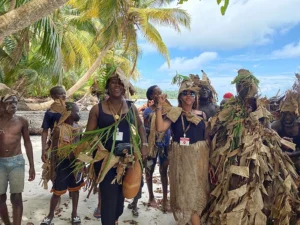
The Benga People and Their Connection to Corisco: History, Culture, and Tradition
Discover the rich history, culture, and traditions of the Benga people of Equatorial Guinea. Learn about their origins, society, and legacy.
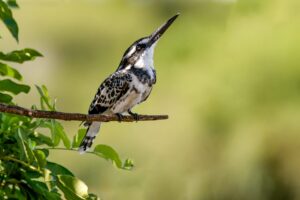
Birdwatching Guide for Travelers in Equatorial Guinea
Did you know that Equatorial Guinea is one of the best birdwatching destinations in West Africa? If you’re passionate about nature, photography, or simply looking for a different kind of trip, get ready to look up and fall in love with a sky full of life and color. With over 300 bird species, many of them endemic or hard to find elsewhere in the world, this small country is a gem for birdwatching tourism enthusiasts.
From the misty peaks of Pico Basile to the jungles of Monte Alén and the calm banks of coastal rivers, every corner offers a natural concert of songs, acrobatic flights, and stunning colors.
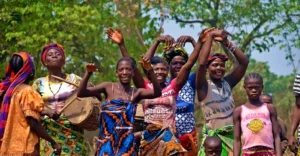
History, Culture and Tradition on Annobon
Annobon, a remote and fascinating island of Equatorial Guinea, boasts a rich history, vibrant culture, and deep-rooted traditions. Influenced by its Portuguese and African heritage, the island’s unique Creole identity is reflected in its language, music, and customs. From traditional dances to community-driven fishing practices, Annobon offers a glimpse into a way of life shaped by resilience and a strong sense of unity.
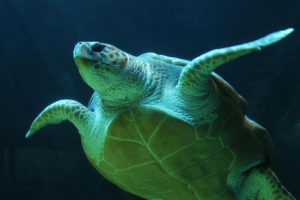
Sea Turtles in Equatorial Guinea: A Hidden Treasure to Discover
On the beaches of Equatorial Guinea, sea turtle nesting is a unique spectacle. These coasts are home to species like the leatherback and green turtle, offering a magical experience. A perfect destination for nature and conservation lovers. Experience it up close!
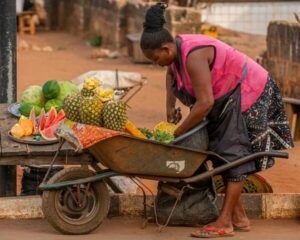
The Tropical Fruits of Equatorial Guinea: A Natural Treasure
Discover the exotic fruits of Equatorial Guinea, such as pineapple, guava, banana, djaka, breadfruit, and abam. Learn about their nutritional benefits, cultivation methods, and their importance in local culture.
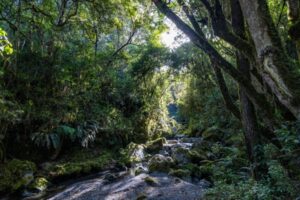
Bere Stone: The Ecological Gem*
Bere Stone is one of the ecological gems gaining increasing significance in the sustainable tourism scene of Equatorial Guinea.
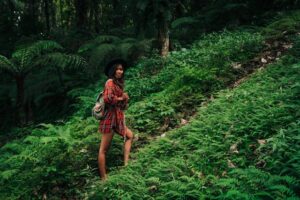
Scientific Reserve of the Great Crater of Luba: All Its Secrets
Discover the Scientific Reserve of the Great Crater of Luba in Equatorial Guinea, a natural paradise that invites you to explore lush rainforests, pristine beaches, and unique vegetation.