Monte Temelon: A Hidden Gem in Equatorial Guinea

Monte Temelon: A Hidden Gem in Equatorial Guinea

Now, we travel from Bioko Island to mainland Equatorial Guinea to discover a relatively young protected area in the only Spanish-speaking African country.

This time, we delve into Monte Temelón, a national park crucial for the conservation of endemic species in Africa and worldwide. If you’re a nature enthusiast, keep reading!

Monte Temelón: 230 Square Kilometers of Nature

Monte Temelón is a natural reserve located in the Añisok district of Wele-Nzas province, within the continental region of Equatorial Guinea. Its name comes from the mountain formation there, Monte Temelón.

This formation is called a “monte” rather than a “mountain” because it lacks great altitude, a result of erosion from streams and water flows originating from countries like Cameroon, flowing inland to the sea.

Monte Temelón covers an area of 230 square kilometers, comprising a large conservation area. It was established in 2000 by government orders to create this natural reserve.

It’s worth noting that being a natural reserve is not the same as being a national park, as the latter has a clearer legal status and is protected by national conservation laws.

Currently, efforts are underway to secure legal protection for Monte Temelón. Projects like CUREF, driven by various NGOs focused on natural conservation in Equatorial Guinea, have been implemented.

Geography and Hydrography of Monte Temelón Natural Reserve

The geography of Monte Temelón, while not as rugged as Mount Alén, does have a steep relief. This is due to both the formation of the Equatorial Guinea continental plate and erosion caused by the streams that pass through here.

For example, both the mountainous area and the plateau have altitudes exceeding 700 meters. Some of the most popular rugged features include caves scattered throughout this natural reserve, such as the Midjoro Stone.

It’s worth noting that the water flows throughout Monte Temelón are not rivers per se, but rather streams. These are tributaries, like branches, originating from main rivers coming from Cameroon and passing near the park, heading towards the sea. It has also been documented that rainfall encourages the formation of temporary streams that join these creeks.

Due to the constant presence of water and rugged formations, waterfalls appear, especially during the rainy season. These waterfalls are usually not permanent and depend heavily on weather conditions.

Another phenomenon highlighted by the orography of the Monte Temelón natural reserve is the formation of caves. These caves have historically been used as shelters for hunters, as well as some animal species during rainy seasons.

The climate of Monte Temelón

The Monte Temelón Natural Reserve is located within the continental region of Equatorial Guinea, which has a warm-humid climate. Being inland, the climate tends to have greater variation compared to the coastal region, for example.

The average temperature ranges around 25 to 26 degrees Celsius. Regarding seasons, there are 2 wet seasons and 2 dry seasons. The wet seasons occur from March to May (spring) and September to November (fall). On the other hand, the dry seasons span from December to February (winter) and June to August (summer).

Rainfall is usually quite intense, accumulating an average of 2500 mm of rainfall each year. This amounts to 2500 liters of water per square meter, with rainfall being a crucial factor for the lush greenery of Monte Temelón and the formation of its seasonal streams.

The flora of the Monte Temelón Natural Reserve

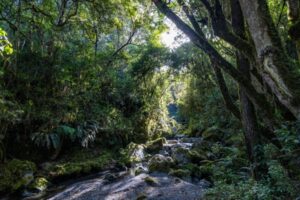
Regarding the flora of this natural reserve, we find that it is very similar to that of Monte Alén National Park. Here, what predominates is the so-called rainforest and humid forests.

Some of the plant species found in Monte Temelón include Entandrophragma utile, a hardwood tree, Pycnanthus angolensis, a tree with edible fruits and seeds, and Treculia africana, a fruit tree. There are also abundant vine-type plants, ground plants, and the famous violet-flowered plants known as Afromomum alboviolaceum.

In general, trees over 10 meters tall are predominant, and due to the lower geographic elevation, there can be a higher density of trees and plants.

What is the fauna like in Monte Temelon?

Due to erosion and the loss of surrounding forests, many species of fauna have found refuge in the Monte Temelón Natural Reserve. This has led to a considerable growth in the population of mammals, especially primates.

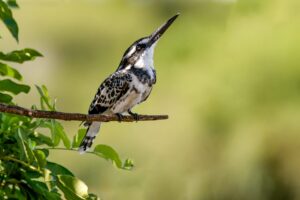
Chimpanzees, monkeys, and mandrills are considered the most important species within the 230 square kilometers of the natural reserve. In addition to these primates, other animals such as sitatungas, deer, and various birds can also be found.

The human impact on the Monte Temelón Natural Reserve

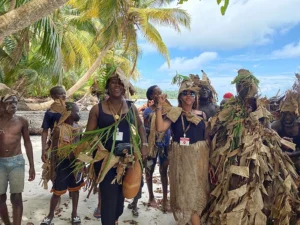
Within the natural reserve, there are no population centers as these are distributed along the roads that run along the perimeter of Monte Temelón. Here, most of these population centers belong to the Fang ethnic group. The largest villages are located along the Añisok road.

The main infrastructure and access to the Monte Temelón Natural Reserve is the Nkue-Añisok road. From there, a forest track leads to trails used both by hunters and by some residents who still retain rights for forest and agricultural exploitation in the area.

Conservation status of Monte Temelón

Currently, despite lacking legal status as a National Park, the conservation status of Monte Temelón is actually good. This is due to minimal human intervention, which has helped protect the animal and plant species living there from threats.

Additionally, both national and international environmental organizations have pushed for the care of the Monte Temelón Natural Reserve. This is because it plays a crucial role in the water balance and availability in Continental Equatorial Guinea.

Efforts have also been made to reduce and control hunting with the aim of transforming the natural reserve into a genuine conservation area.

Tourism within Monte Temelón

Although few local residents retain some forestry and agricultural rights around the perimeter of the reserve, and hunting has been limited, the economic potential of Monte Temelón is immense.

Especially when considering ecotourism and sustainable tourism practices, which encourage tourists to engage directly with nature while contributing to the conservation of this natural reserve.

For example, with adventure tours like those offered by Rumbo Malabo, it’s possible to experience bird watching, wildlife spotting and hiking. All of this is done under sustainable practices to ensure the best experience without harming the environment.

Picture of Rumbo Malabo

Rumbo Malabo

Tour Operator in Equatorial Guinea

¿Te ha gustado? Compártelo con tus amigos en cualquier red social y ayúdanos a crecer.

Facebook
Twitter
LinkedIn
Email
WhatsApp
Telegram

Birdwatching Guide for Travelers in Equatorial Guinea

Did you know that Equatorial Guinea is one of the best birdwatching destinations in West Africa? If you’re passionate about nature, photography, or simply looking for a different kind of trip, get ready to look up and fall in love with a sky full of life and color. With over 300 bird species, many of them endemic or hard to find elsewhere in the world, this small country is a gem for birdwatching tourism enthusiasts.
From the misty peaks of Pico Basile to the jungles of Monte Alén and the calm banks of coastal rivers, every corner offers a natural concert of songs, acrobatic flights, and stunning colors.

Read More
Annobonese People

History, Culture and Tradition on Annobon

Annobon, a remote and fascinating island of Equatorial Guinea, boasts a rich history, vibrant culture, and deep-rooted traditions. Influenced by its Portuguese and African heritage, the island’s unique Creole identity is reflected in its language, music, and customs. From traditional dances to community-driven fishing practices, Annobon offers a glimpse into a way of life shaped by resilience and a strong sense of unity.

Read More
``
Rumbo Malabo
Privacy Overview

This website uses cookies so that we can provide you with the best user experience possible. Cookie information is stored in your browser and performs functions such as recognising you when you return to our website and helping our team to understand which sections of the website you find most interesting and useful.