
Explore Monte Alén National Park from start to finish.
One of the natural and ecotourism gems of Equatorial Guinea is undoubtedly Monte Alén National Park. Its vast expanse is home to unique and magical species that are threatened elsewhere but find refuge here.
That’s why we’re here to tell you everything you need to know about Monte Alén National Park. This way, you can marvel at one of the world’s most important natural reserves and perhaps be inspired to explore its jungles on your next vacation.
Anatomy of Monte Alen National Park: Location and Size
Monte Alén National Park is a natural reserve located in the continental region of South Guinea. Specifically, the park is situated in the Niefang mountains, in the district of the same name, Centro Sur province.
The park covers an area of 2,000 square kilometers, of which an estimated 1,500 square kilometers are covered by dense forests. To put it into perspective, Monaco measures 2.4 square kilometers in size, meaning it could fit into this vast natural reserve 833 times.
History: When did it become a protected natural area?
The history of Monte Alen National Park dates back to 1933, when Equatorial Guinea, still part of Spain, committed to creating a protected natural area under the Conference for the Protection of Flora and Fauna in Africa. Unfortunately, the military uprising of July 1936 and the subsequent Spanish Civil War prevented this from happening. After the chaos of the civil war and World War II, the hunting regulations were established in 1954.
These laid the groundwork for nature conservation, with Equatorial Guinea passing its first protected areas law in 1988 (Law No. 8/1988) after gaining independence from Spain. Subsequently, in 1997 under Law No. 3/1997, Monte Alen National Park was officially established, now protected by Equatoguinean authorities.
The geography of Monte Alen National Park
The geography of Monte Alen National Park is rugged and varied. At its lowest points, the altitude of the park reaches around 300 meters above sea level. As you move higher, it reaches between 1100 to 1200 meters.
In the lower parts, there are flat terrains located in the basin of the Wele River, which is the largest river in Equatorial Guinea. Besides the Wele, there’s also the Laña River, the main tributary of the Wele.
Moving towards the Niefang mountains, the terrain becomes more elevated and rugged. This area features prominent mountains such as Mount Alen, which provides a spectacular viewpoint at over 1100 meters, offering stunning views of the entire natural reserve.
Another unique feature is the composition of the soil, primarily consisting of gneiss, granite, and sedimentary materials deposited in the Wele River basin and the estuary of the Muni River.
The climate of Monte Alen National Park
Due to its continental location and geographical conditions, Monte Alen National Park experiences a warm, humid climate. The park distinguishes between four seasons of two types: two wet seasons and two dry seasons.
The major wet season occurs from September to November, during which the highest rainfall is recorded. The second wet season spans from March to May, with less frequent and intense rainfall compared to the first.
The dry seasons cover December to February and June to August. The average temperature in Monte Alen National Park is around 25 degrees Celsius. Historical data shows minimum temperatures averaging around 18 degrees Celsius, while maximum temperatures can exceed 26 degrees Celsius.
What is the flora like in Monte Alen National Park?
With an area of over 1,500 square kilometers covered by vegetation, Monte Alen National Park stands out for its abundant flora. Featuring a tropical forest ecosystem, this natural reserve is characterized by a rich presence of trees ranging from 10 to 40 meters in height.
According to experts, the park’s formation influences the types of forests found within it. The Pluviselva, a type of climax humid forest, covers the largest area. This forest type varies in tree height and vegetation density as altitude changes.
The park is notable for the presence of typical species found in tropical forests such as Entandrophragma utile, a hardwood tree, and Pycnanthus angolensis, a tree bearing edible fruits and seeds. There are also species native to the continent like Treculia africana, a fruit tree, and Afromomum alboviolaceum, a plant species with violet flowers that is abundant in this area.
And what about the fauna?
The fauna is another great treasure of this national park. According to conservation data, there are over 300 different species inhabiting here. Among mammals, more than 35 species are present, including:
– Western lowland gorillas.
– Common chimpanzees.
– Black colobus monkeys.
– Mandrills.
– Leopards.
– African golden cats.
– African forest elephants.
Additionally, there are nearly 250 species of birds of various kinds, along with 25 species of reptiles and 27 species of amphibians. Of course, the park is also home to hundreds of species of insects, with a notable presence of colorful butterflies.
Within this park, you can admire unique animals that, while often elusive and hard to spot, provide a spectacular sight, such as the gorillas.
Do people live in Monte Alen National Park?
Within the national park, there are no human settlements, although some villages can be found along the road in the Niefang-Mosumu and Niefang-Evinayong sectors, mostly inhabited by the Fang ethnic group.
While there are no permanent populations inside the park, human activity is present in its surroundings. One example is subsistence agriculture with the establishment of small farms.
There is also hunting, often illegal, which has endangered species such as the blue duiker and pangolin. Artisanal fishing, for both fish and shellfish consumption, is another human activity in Monte Alen National Park.
Fortunately, this natural reserve has been protected from deforestation and timber trade through initiatives like ECOFAC G.E. and national laws, alongside international conservation organizations.
Conservation status of Monte Alen National Park
Currently, Monte Alen National Park plays a very important role in the conservation of flora and fauna not only in Equatorial Guinea but also in Africa and the world. That’s why significant efforts have been made to ensure the protection of this region and its rivers.
Both the government of Equatorial Guinea and international organizations have contributed to keeping this natural reserve safe from predation. Various laws have been strengthened to ensure that the park remains a model of conservation and species protection.
One of the main challenges encountered is the lack of sustainable utilization strategies for the park. Additionally, local residents argue that there are few alternatives to improve their quality of life through various economic activities such as tourism, livestock farming, agriculture, etc.
Tourism in Monte Alen National Park
The main activity gaining popularity around Monte Alen National Park is tourism. Nowadays, local agencies are promoting tours, excursions, and activities within this natural reserve, such as hiking and animal watching.
According to experts, the park has enormous potential both as a conservation example and as a destination for eco-tourists. Visiting this reserve is therefore a way to encourage its conservation and contribute to the development of Equatorial Guinea through its growing tourism industry.
¿Te ha gustado? Compártelo con tus amigos en cualquier red social y ayúdanos a crecer.

Ndowe Tribe: History, Culture & Legacy in Equatorial Guinea
Discover the Ndowe tribe’s rich history, culture, and traditions in Equatorial Guinea, from their origins to their enduring legacy today.
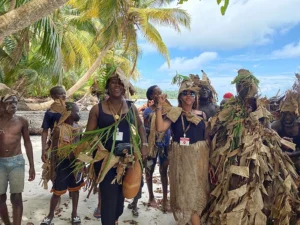
The Benga People and Their Connection to Corisco: History, Culture, and Tradition
Discover the rich history, culture, and traditions of the Benga people of Equatorial Guinea. Learn about their origins, society, and legacy.

Birdwatching Guide for Travelers in Equatorial Guinea
Did you know that Equatorial Guinea is one of the best birdwatching destinations in West Africa? If you’re passionate about nature, photography, or simply looking for a different kind of trip, get ready to look up and fall in love with a sky full of life and color. With over 300 bird species, many of them endemic or hard to find elsewhere in the world, this small country is a gem for birdwatching tourism enthusiasts.
From the misty peaks of Pico Basile to the jungles of Monte Alén and the calm banks of coastal rivers, every corner offers a natural concert of songs, acrobatic flights, and stunning colors.

History, Culture and Tradition on Annobon
Annobon, a remote and fascinating island of Equatorial Guinea, boasts a rich history, vibrant culture, and deep-rooted traditions. Influenced by its Portuguese and African heritage, the island’s unique Creole identity is reflected in its language, music, and customs. From traditional dances to community-driven fishing practices, Annobon offers a glimpse into a way of life shaped by resilience and a strong sense of unity.

Sea Turtles in Equatorial Guinea: A Hidden Treasure to Discover
On the beaches of Equatorial Guinea, sea turtle nesting is a unique spectacle. These coasts are home to species like the leatherback and green turtle, offering a magical experience. A perfect destination for nature and conservation lovers. Experience it up close!
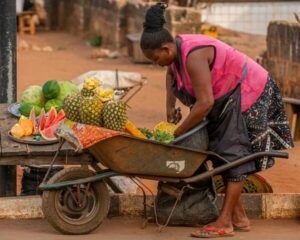
The Tropical Fruits of Equatorial Guinea: A Natural Treasure
Discover the exotic fruits of Equatorial Guinea, such as pineapple, guava, banana, djaka, breadfruit, and abam. Learn about their nutritional benefits, cultivation methods, and their importance in local culture.
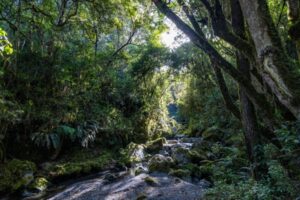
Bere Stone: The Ecological Gem*
Bere Stone is one of the ecological gems gaining increasing significance in the sustainable tourism scene of Equatorial Guinea.

Scientific Reserve of the Great Crater of Luba: All Its Secrets
Discover the Scientific Reserve of the Great Crater of Luba in Equatorial Guinea, a natural paradise that invites you to explore lush rainforests, pristine beaches, and unique vegetation.