Jose Mañana «Equatorial Guinea is a wonder to be discovered»
This post is also available in:
English
Español (Spanish)
72,000 people follow the YouTube channel of José Mañana, an Equatoguinean influencer who is making his country known to the world and who tells us about the wonders of the only Hispanic country in Africa
“A gentle breeze caresses you while you hear the piercing sound of the waves hitting the seawall. And you get that feeling that you’re experiencing something you’ve never felt before. You vibrate with the hustle and bustle of the people crowding around and it smells… what does Equatorial Guinea smell like? Equatorial Guinea smells like poppies”. This is how José Mañana remembers his last afternoon on Bata seafront, “one of the most beautiful places” he has ever been to and his favourite spot in the city. And he does so with the nostalgia of someone who, after years away, dreams of returning home.
José is 25 years old and defines himself as “a guy who makes sure that his country is known in the Hispanic world”. To say this sounds like a paradox, like trying to make Portugal known in Europe or Korea in Asia. Because his country, Equatorial Guinea, is as much a part of the Hispanic world as Spain, Argentina or Colombia. Located in Central Africa and independent since 1968, Guinea is the only Spanish-speaking country on the continent and, together with America and Europe, “closes the triangle” of Cervantes’ language in the world, as the writer Donato Ndongo likes to say.
But very little of this is known outside its borders. And that is what José fights against with his YouTube channel, which he started in 2019 and which already has 72,000 followers. He started with videos about magic and social criticism. He soon moved to Malaysia to study and realized that people needed to know that Equatorial Guinea existed and had a lot to share with the world. “Nobody even knew that Spanish was spoken in Africa. When they heard me speaking it, they would ask me how long I had lived in Spain, I’ve never set foot in Spain, Spanish is spoken in my country!”
“When they heard me speaking Spanish, they would ask me how long I had lived in Spain, I've never set foot in Spain, Spanish is spoken in my country!”
Jose Mañana Tweet
Spanish is, like the other European languages spoken in Africa, a product of colonization. Despite this, he believes that Guineans have made it part of their culture: “It was something that was imposed on us, but at the same time it is the best legacy that that dark period left us. We young people know that Spanish is our main tool for communicating and going out into the world”.
Nor does José believe that the language of Cervantes is endangered by the coexistence of French and Portuguese, which since 1998 and 2007 share official status with Spanish: “I have never heard French in the street, nobody is interested in speaking it, and Portuguese is not even studied at school. There are news programs in both languages and their audience is zero. Guineans don’t see the point of changing languages, we have fallen in love with Spanish”. In everyday life, his countrymen use it in the public, school and work spheres, while in the family, the native languages prevail, especially Fang (on the mainland) and Bubi (on the island of Bioko).
“We have fallen in love with Spanish and we know that it is our main tool for communicating and going out into the world"
Jose Mañana Tweet
The common language is, for José, what unites Equatorial Guinea with Spain and with the 19 Spanish-speaking countries of America: “When I came into contact with the Latin world, I saw that I identified with them, that the language led us to a shared culture and that Equatorial Guinea must be considered part of that community if we want them to know us and visit us”. This is precisely the pending challenge in Equatorial Guinea: tourism.
“Equatorial Guinea is a wonder to be discovered, but if people don’t know the value of tourism, they can’t invest in it”
Jose Mañana Tweet
Despite the fact that the country is, for this influencer, “a wonder to be discovered”, it is at the bottom of the ranking of the least visited places in the world. The reason? For him, it is the lack of knowledge of the industry: “If the people who live in Equatorial Guinea don’t know the value of tourism, they can’t invest in it. Right now our only economic source is oil, but it will run out. And by then we need to make Guinea a paradise, ease visa procedures and get people to come and see us”.
In his generation, the mentality towards tourism is changing: “We already know how to promote our country internationally. On Google, Equatorial Guinea is starting to become a trend. But we lack means for those who want to visit us to come”. At the same time, initiatives by young entrepreneurs to facilitate travel to Equatorial Guinea are thriving, such as the agency Rumbo Malabo.
José Mañana is convinced that anyone who sets foot on his land will be captivated by Equatorial Guinea’s Hispanic, Caribbean and African charm. At the top of his list of must-see places is Pico Basilé, on the island of Bioko, very close to the capital. “As well as being the highest mountain in the country, it is an ancient volcano at the foot of which there is a natural park with primates, lush vegetation and other endangered species”. Another essential visit for him is the park of Monte Alén, in the continental region and famous in Spain for being the birthplace of “Snowflake”, the famous albino gorilla of the Barcelona Zoo.
“A tourist could enjoy immersing himself in the wildest part of the country and then sleep in a place with all the comforts”
Jose Mañana Tweet
Another attraction for the traveller, he says, is the contrast between the abundant wilderness and the developed tourist infrastructure: “The Djibloho hotel, in the middle of the mainland, is a huge space where you can live with someone for three months and not meet them once. A tourist could enjoy immersing himself in the wildest part of the country and then sleep in a place with all the comforts”.
But without a doubt, what he misses most about home is the food. “My mouth starts to water as I remember the flavours of Equatorial Guinea. Bambucha, which is eaten with corn or crushed herbs with palm kernels; or añorowono, a dish made from delicious ground peanuts”.
“My mouth starts to water as I remember the flavours of Equatorial Guinea: bambucha or añorowono”
Jose Mañana Tweet
In his videos, José Mañana refutes a common mantra about Africa: insecurity. The case of Equatorial Guinea is, he assures us, an oasis of calm with almost non-existent crime rates: “A Mexican follower travelled to Equatorial Guinea and sent me a video to show me, astonished, that he was walking through the streets of Malabo in the middle of the night without a single incident. Apart from the occasional robbery, there are hardly any incidents. In Guinea we have a lot of respect for tourists, we are very fond of them”.
“There are hardly any incidents in Equatorial Guinea, we have a lot of respect for tourists, we are very fond of them”
Jose Mañana Tweet
A few months after returning home, he says that his years abroad have made him realize the beauty of his country: “Before, my mind was closed. Now I have two cultures, two visions and I feel I have to show the world what Equatorial Guinea is like”. That “world” is getting bigger and bigger. Thanks to his work and that of other young entrepreneurs, thousands of people know a little more every day about this little piece of Hispanic Africa that one day, he hopes, will be visited, loved and remembered as it deserves to be.
Do not hesitate to follow us on social media to keep up with all our news and articles
Did you like it? Share it with your friends on any social media and help us grow.

Ndowe Tribe: History, Culture & Legacy in Equatorial Guinea
Discover the Ndowe tribe’s rich history, culture, and traditions in Equatorial Guinea, from their origins to their enduring legacy today.
The Benga People and Their Connection to Corisco: History, Culture, and Tradition
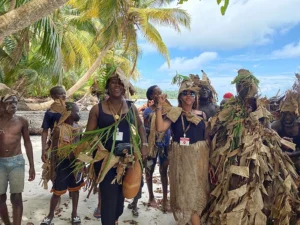
Discover the rich history, culture, and traditions of the Benga people of Equatorial Guinea. Learn about their origins, society, and legacy.
Birdwatching Guide for Travelers in Equatorial Guinea
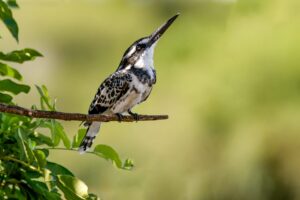
Did you know that Equatorial Guinea is one of the best birdwatching destinations in West Africa? If you’re passionate about nature, photography, or simply looking for a different kind of trip, get ready to look up and fall in love with a sky full of life and color. With over 300 bird species, many of them endemic or hard to find elsewhere in the world, this small country is a gem for birdwatching tourism enthusiasts.
From the misty peaks of Pico Basile to the jungles of Monte Alén and the calm banks of coastal rivers, every corner offers a natural concert of songs, acrobatic flights, and stunning colors.
History, Culture and Tradition on Annobon
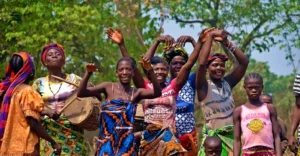
Annobon, a remote and fascinating island of Equatorial Guinea, boasts a rich history, vibrant culture, and deep-rooted traditions. Influenced by its Portuguese and African heritage, the island’s unique Creole identity is reflected in its language, music, and customs. From traditional dances to community-driven fishing practices, Annobon offers a glimpse into a way of life shaped by resilience and a strong sense of unity.
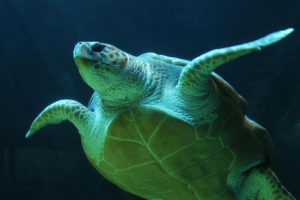
Sea Turtles in Equatorial Guinea: A Hidden Treasure to Discover
On the beaches of Equatorial Guinea, sea turtle nesting is a unique spectacle. These coasts are home to species like the leatherback and green turtle, offering a magical experience. A perfect destination for nature and conservation lovers. Experience it up close!
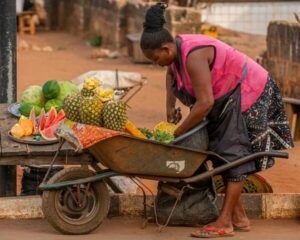
The Tropical Fruits of Equatorial Guinea: A Natural Treasure
Discover the exotic fruits of Equatorial Guinea, such as pineapple, guava, banana, djaka, breadfruit, and abam. Learn about their nutritional benefits, cultivation methods, and their importance in local culture.
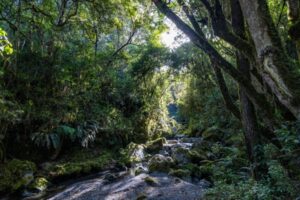
Bere Stone: The Ecological Gem*
Bere Stone is one of the ecological gems gaining increasing significance in the sustainable tourism scene of Equatorial Guinea.
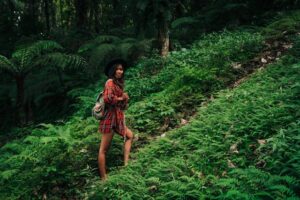
Scientific Reserve of the Great Crater of Luba: All Its Secrets
Discover the Scientific Reserve of the Great Crater of Luba in Equatorial Guinea, a natural paradise that invites you to explore lush rainforests, pristine beaches, and unique vegetation.