
Scientific Reserve of the Great Crater of Luba: All Its Secrets

Scientific Reserve of the Great Crater of Luba: All Its Secrets

Of volcanic origin, the Scientific Reserve of the Crater of Luba is one of the most important natural reserves in Equatorial Guinea and on Bioko Island. Its significance lies in its role in both conservation and scientific research.

Here, we will share everything you need to know about the Scientific Reserve of the Crater of Luba and the ecological reserve it represents.

Description of the Crater of Luba Natural Reserve

As its name suggests, the Crater of Luba is a volcanic caldera that formed from the San Carlos volcano due to eruptive processes.

Located on Bioko Island, the Crater of Luba is the second highest peak on the island, with an elevation exceeding 2,660 meters above sea level. The natural reserve covers an area of over 840 square kilometers.

Of these 840 km², 640 square kilometers consist of terrestrial green areas, meaning within the island, while approximately 200 square kilometers are marine habitats. This makes it one of the largest ecological reserves in the insular region of Equatorial Guinea.

Geography, and Hydrology of the Scientific Reserve of the Great Crater of Luba

Due to its volcanic origin, the Crater of Luba Reserve is characterized by a volcanic peak (the caldera itself) and rugged terrain with large rock formations. Most of the rocks found here are basaltic, as the lava composition is predominantly basaltic.

Another distinctive feature of the Crater of Luba Reserve is its southern beaches. These beaches are formed of black sand and gravel, creating a striking contrast with the surrounding rainforest and the blue of the Atlantic Ocean.

In terms of hydrology, the rugged terrain allows for the formation of streams and tributaries in canyons and ravines. During the rainy season, it is common to see waterfalls emerging due to the volcanic landscape and its surrounding areas.

Climate of the Crater of Luba

The climate of the Crater of Luba is primarily equatorial, which means it is mostly tropical with significant monsoon influence. The average temperature in this natural area reaches around 25°C. Humidity is higher near the Crater of Luba and above 1,000 meters above sea level due to the formation of rain belts.

In the Crater of Luba, precipitation can exceed 10,000 mm during monsoon seasons. The dry season spans from December to March, while the wet season extends from June to October.

What is the flora like in the Scientific Reserve of the Great Caldera of Luba?

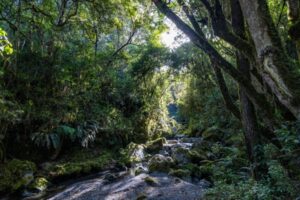
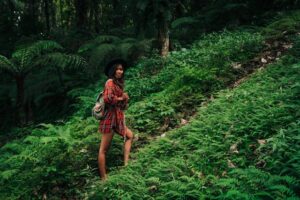
In the Crater of Luba Reserve, the flora is very similar to that found in the rainforests of Cameroon and Nigeria, as well as in Pico Basile. The majority consists of tropical forests and rainforests, with vegetation changing in response to altitude.

For instance, in the lower areas of the Crater of Luba, there is an abundance of tropical trees and lianas. Some of the most common species include Dum Ceiba pentandra, Ilomba Picnantus angolensis, Bocapi Staulla gabonensis, and Abang Clorophora excelsa.

As the altitude increases, the vegetation transitions to that typical of tropical mountain forests. Here, mosses, ferns, lichens, and scrubland become more prominent, as trees struggle to grow as easily at higher elevations compared to sea level.

And what about the fauna?

Considered one of the most important ecological reserves, the Crater of Luba is home to a significant presence of large animal species. For example, its beaches are one of the most important sea turtle nesting sites in Africa.

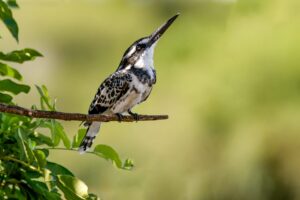
Among mammals, you can find the Preuss’s monkey, the ear-eared monkey, black and red colobus monkeys, as well as drills. The Crater of Luba is also the last place on the island where black hornbills can still be regularly seen, along with gray parrots, hadada ibises, and red-necked malimbos, among other species.

Additionally, the reserve is home to one of the most popular endemic species of Equatorial Guinea, the Fernando Po miopito. Due to the size of the Crater of Luba and the island in general, there are no large species remaining. The last large species were the red buffalo and the forest hog, which have been extinct both in the Crater of Luba and on Bioko Island.

Scientific Importance of the Crater of Luba

The Crater of Luba is considered one of the most important scientific and natural research reserves. Firstly, it offers a glimpse into the geological past and the formation of Bioko Island following a fracture in the continental mass of equatorial Africa.

Secondly, the Crater of Luba houses an almost pristine tropical rainforest, serving as a crucial refuge for small primates. Coupled with the significance of its beaches as a nesting site for sea turtles, the Crater of Luba stands out as a sanctuary for biological research at local, regional, and global levels.

Human Activities in the Crater of Luba?

Unfortunately, while the Crater of Luba is a sanctuary, it has also been threatened by human activities. The primary activity in this area of Bioko Island is hunting, which has contributed to the decline in primate populations.

Regarding human activities, fishing and agriculture are the main ones. Agriculture is typically practiced on farms around the perimeter of the Crater of Luba. The largest populations are in Malabo, Luba, and Bioko, which are several kilometers away from this natural park.

Conservation Status of the Scientific Reserve of the Great Caldera of Luba

The Crater of Luba is legally designated as a conservation natural reserve, which helps protect it from exploitation and human encroachment. This status is established under Law 8/1988, which designated the southern part of the island, including the Crater of Luba, as a protected area.

Additionally, local non-profit organizations have made significant efforts to ensure the conservation of the Crater of Luba and its species, such as sea turtles and primates. These efforts include various projects and monitoring to prevent poaching.

Tourism in the Scientific Reserve of the Great Crater of Luba

The main activity gaining popularity around the Scientific Reserve of the Great Caldera of Luba is tourism. Today, local agencies are promoting tours, excursions, and activities within this natural reserve, such as hiking and wildlife viewing.

Experts believe that its potential as both a conservation model and an ecotourism destination is immense. Therefore, visiting this reserve not only supports its conservation but also contributes to the development of Equatorial Guinea through its growing tourism industry.

Picture of Rumbo Malabo

Rumbo Malabo

Tour Operator in Equatorial Guinea

¿Te ha gustado? Compártelo con tus amigos en cualquier red social y ayúdanos a crecer.

Facebook
Twitter
LinkedIn
Email
WhatsApp
Telegram

Birdwatching Guide for Travelers in Equatorial Guinea

Did you know that Equatorial Guinea is one of the best birdwatching destinations in West Africa? If you’re passionate about nature, photography, or simply looking for a different kind of trip, get ready to look up and fall in love with a sky full of life and color. With over 300 bird species, many of them endemic or hard to find elsewhere in the world, this small country is a gem for birdwatching tourism enthusiasts.
From the misty peaks of Pico Basile to the jungles of Monte Alén and the calm banks of coastal rivers, every corner offers a natural concert of songs, acrobatic flights, and stunning colors.

Read More
Annobonese People

History, Culture and Tradition on Annobon

Annobon, a remote and fascinating island of Equatorial Guinea, boasts a rich history, vibrant culture, and deep-rooted traditions. Influenced by its Portuguese and African heritage, the island’s unique Creole identity is reflected in its language, music, and customs. From traditional dances to community-driven fishing practices, Annobon offers a glimpse into a way of life shaped by resilience and a strong sense of unity.

Read More
``
Rumbo Malabo
Privacy Overview

This website uses cookies so that we can provide you with the best user experience possible. Cookie information is stored in your browser and performs functions such as recognising you when you return to our website and helping our team to understand which sections of the website you find most interesting and useful.